
Dropshipping larp: what ecom larping is and the honest way
Updated · By Larpea
Ecom larping is staging a successful online store on camera with simulated sales, dashboards and notifications. As a skit it is harmless; as proof used to sell a course it is deceptive. 23 tools in our revenue dashboard and notification categories serve it. This guide explains how it is made and gives seven rules for an honest version.
What ecom larping is
Ecom larping is the practice of staging a successful online store on camera with sales that did not happen. The word borrows from larp, “live action role-play”, and the format is sold two ways: as comedy, and as proof. The tools behind it sit in the revenue dashboard mockups category and its notification cousin, and our October 2026 count is in the data box below.
- ecom larping
- Ecom larping is staging a successful online store with simulated sales, dashboards or order notifications, either as a joke or as a costume for selling a course or looking rich.
- A skit where a lock screen fills with orders and the creator pretends to panic, captioned “skit” and labelled a mockup: the honest version.
- A screen recording of a revenue dashboard captioned “day 3 of my store”, posted as a result and followed by a link to a course: the dishonest version.
- A store demo for a product that has no customers yet, shown with simulated orders and labelled as a demo: a use that needs no trick at all.
Earliest dated press coverage we found of the dashboards behind it: (404 Media, 8 July 2026).
The definition has two halves because the same video can belong to either. Nothing in the pixels tells you which; the caption, the offer that follows and the audience’s expectations do.
How much of the market it takes up
The format takes up a real share of the market. We counted the tools in our directory that serve it.
- 18%of the 125 larp tools in our directory serve the fake-sales format: 23 dashboard or notification tools
- 74%of those 23 copy the interface or product of a real brand (17 of 23)
- 4of them are rated high-risk or fraud on our written grid
- 14have a free version
Source: our directory (State of larp 2026), tools checked between 28 September and 12 October 2026. A tool counts when its main or second category is revenue dashboards or fake notification apps.
Data: ecom-larping-tools.csv, computed on .
The brand figure matters more than the count. Dashboards that imitate a payments or store interface are the ones people mistake for the real thing, and they are the ones courses are sold on. Dashboards and notifications of our own design are the ones that keep the joke a joke.
How the format is made
An ecom larp is three screens cut together. A revenue dashboard where the day’s volume climbs, a store admin where orders land, and a lock screen where notifications stack up. Each exists as a simulator: Flextripe for the dashboard, Shopiflex for the store admin and My Larp Notifs for the lock screen. All three are mockups of our own design, under a business name you invent. The notifications screen is covered step by step in how to film sales notifications.
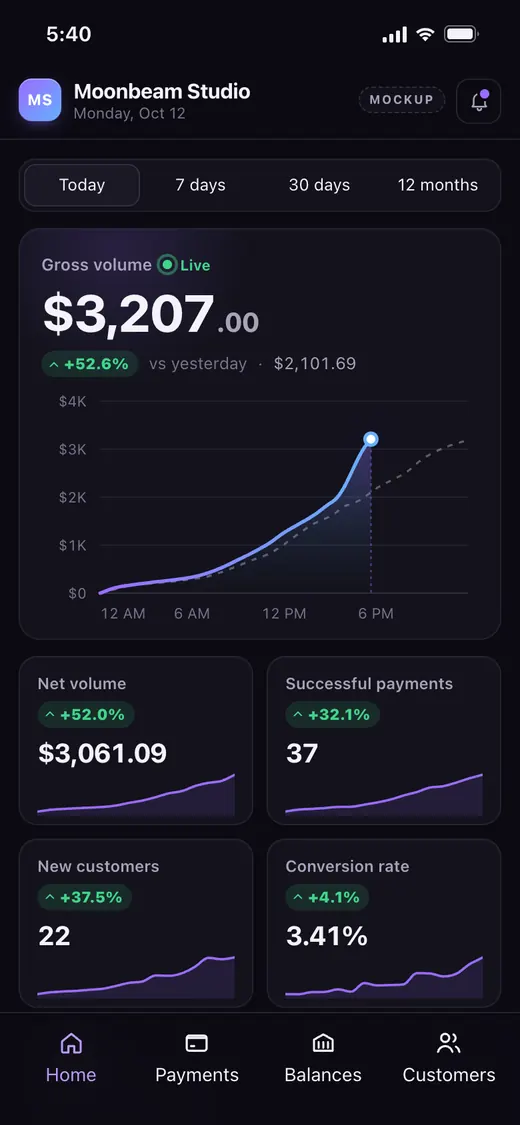
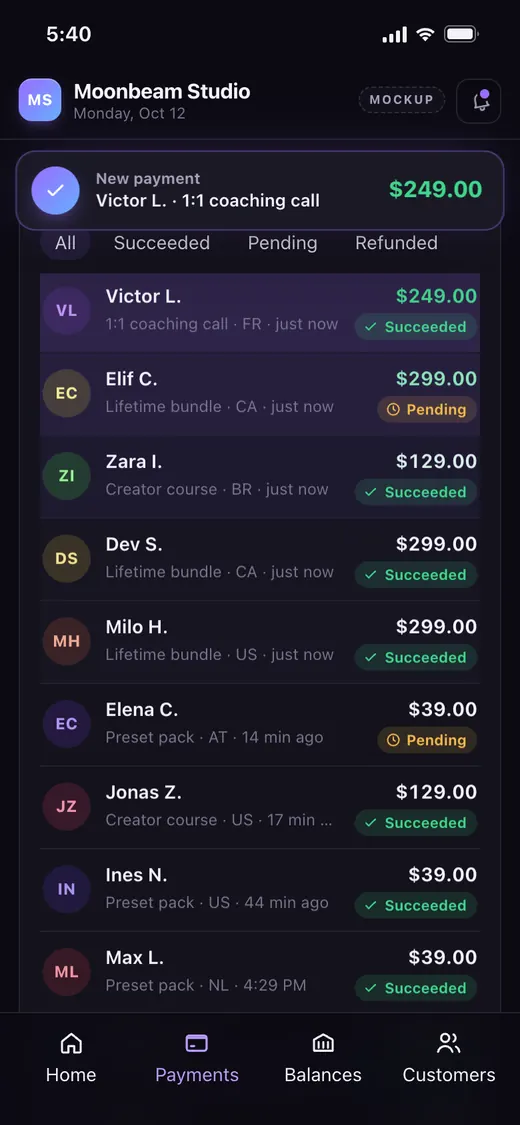
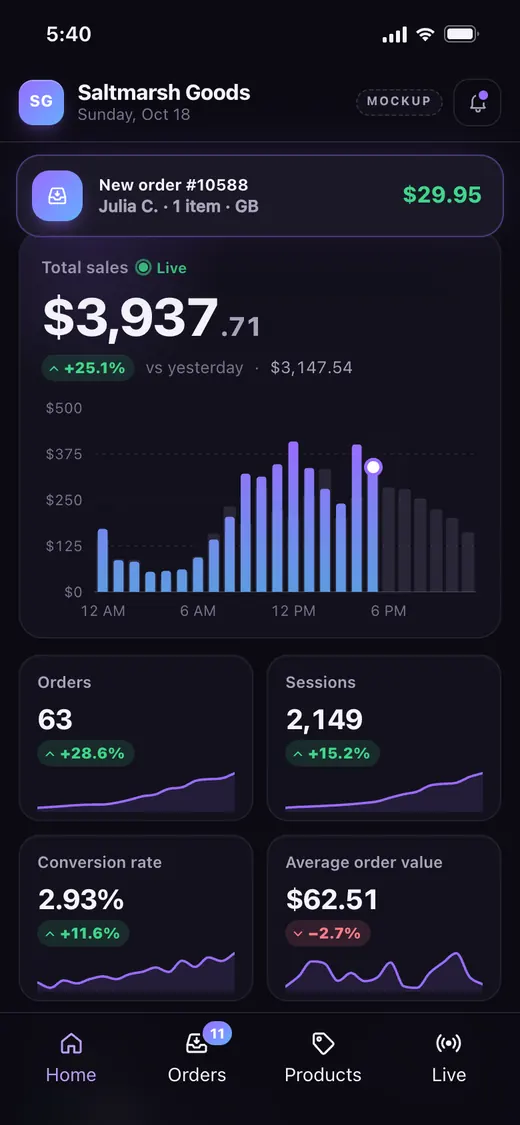
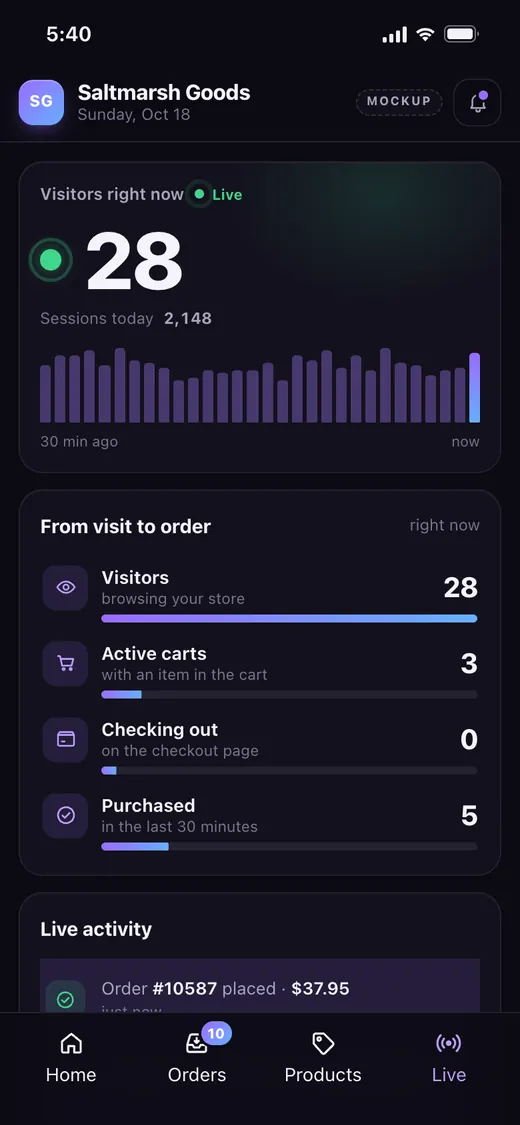
None of this is difficult, which is the point. The skill in a good ecom skit is the writing, not the screens. What separates the versions is what you say about them.
The problem: courses sold on sales that never happened
On 8 July 2026, 404 Media published an investigation into larping, in which hustlers and influencers use fabricated dashboards as evidence of wealth, and it describes the get-rich-quick courses sold on the back of them. Moneywise covered the fake dashboards behind such courses on 19 July 2026. That is the harm: a viewer pays for a course because a screen says the teacher earned a sum that no customer ever paid.
US regulators have been explicit that earnings claims must be true and backed up. The FTC’s notice of penalty offenses on money-making opportunities and the Business Opportunity Rule, 16 CFR Part 437 are the starting points; the details are in is larping illegal in the US. This page is general information, not legal advice.
If you are on the receiving end of an income claim that comes as a screenshot, how to spot fake income screenshots lists the checks. The short version: a dashboard image is not a record, and a real business can show you something that checks out.
The honest version, in seven rules
You can make this format without lying to anyone. These seven rules are the ones our apps are built around.
- Say what it is, in the caption and on screen. “Mockup”, “skit” or “simulated” in the first line. Keep the label the app draws.
- Use your own design. A dashboard that copies a real payments company, or a notification dressed as a real store, borrows someone’s brand and invites the wrong reading.
- Never put an offer next to it. If the video ends with a course, a coaching call or a signal group, remove the mockup from it. That is the line between a joke and a pitch.
- Do not state a number you did not earn. If you want a figure, give one a viewer can check, or give none.
- Invent your customers. Made-up first names and initials, never a real buyer’s or a real person’s.
- No phone numbers, no links on screen. That is the feature that turns a fake notification into a scam, as the case in the notifications guide shows.
- Play it for an audience that is in on it. Satire and skits work because viewers know. A clip aimed at people who might believe it is a different clip.
The store, the dashboard and the lock screen all stay on the right side of that line when each of the seven holds. When one fails, the same clip reads as a claim.
The legitimate uses that need no trick
Most of what these tools are good at has nothing to do with looking rich. A founder with a store product and no customers yet needs screens to demo. A designer needs plausible numbers for a case study. A teacher needs a dashboard to explain what revenue metrics mean without exposing a real account. All three use the same mockups with the label showing, and none needs anyone to believe the numbers. For the card and bank screens that go with a store story, see bank and card wallet mockups.